Google I/O 2015: Maps to bring offline search and navigation; Google Now gets smarter

maps-624x351.png


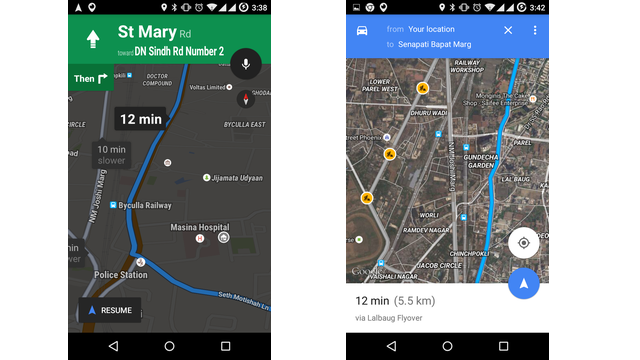
Google I/O 2015 developer conference had some major announcements on the Google Maps app. Just like it has done with YouTube, you will soon be able to take the Maps’ search and turn-by-turn navigation feature offline. Google hasn’t given an exact date as to when this feature will begin working on Maps.

According to Google, even for Maps that you have taken offline, you will get the turn by turn voice navigation feature. This is particularly relevant in markets such as India where cellular connectivity may not always be speedy at all times while driving.

Offline maps navigation will certainly help out a lot of people on saving up on data charges when they are out and about. However, one also needs to keep in mind that taking a map along with all the navigational information offline will certainly take up significant space on your storage.
Now


While Now is a smart personal assistant, Google has improved upon it as well. A feature called ‘Now on Tap’ will basically let Google Now be activated from any screen or app in a contextual manner.

“With “Now on tap,” you can simply tap and hold the home button for assistance without having to leave what you’re doing—whether you’re in an app or on a website,” says the Google blog post.
For instance, if you are mailing a friend about movie listings, tap on the movie name and hold on to the home button. Google Now will just pull up the relevant Now cards to give you more information. This basically lets you do simple tasks without leaving your current app.

Similarly, if you are chatting with a friend about going out to eat at a restaurant, Now on Tap will bring up restaurant details and you can also take actions such as make a call to reserve a table or read reviews on supported apps or lookup the location on a map and so on.

“Google can show you apps from your phone that may help with what you’re doing based on your context—IMDb for movie reviews, OpenTable for reservations, and many more. This is another way developers can get their apps in front of their users at the right moment, when an app is relevant to the task at hand,” says the Google Inside search blog.

To make this possible Google is implementing a deeper level of machine learning which Google senior vice president Sundar Pichai stressed on during the Google I/O keynote.

This will also be a good answer to Cortana’s foray into the Android and iOS ecosystems as well as Apple’s upcoming smart assistant called Proactive on iOS 9. We will come to know how effective Now on Tap is once it launches in the market in the coming months.






Google I/O 2015: New Photos app offers unlimited photo and video storage

Photos-624x351


Google announced a revamped Photos app, which was so far integrated within Google+,  with some interesting features at the Google I/O 2015 developers conference on May 28. The show-stopping feature being the ability to support unlimited photos and video storage.


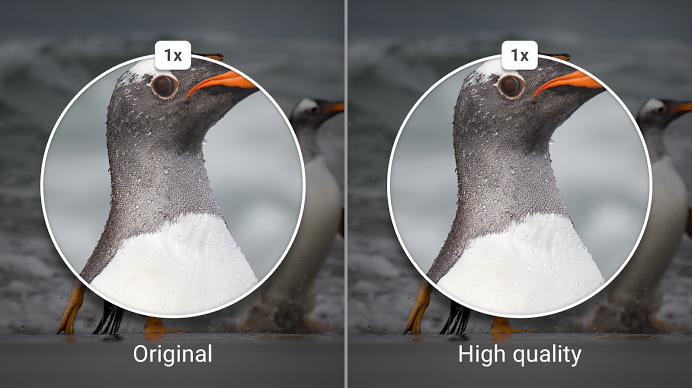
However, the image resolution is limited to 16 megapixels and video resolution is limited to 1080p videos, which is good enough for most mobile and amateur photographers out there. This app will be available for Android, iOS as well as the web. With unlimited storage for both photos and videos, Google Photos may just make every other photo storage service, which charges users after a fixed storage limit, redundant.
Screen-Shot-2015-05-26-at-13.49.11

Auto-backup feature will continue with Google Photos and you can store all your photos and videos which can be accessed across devices. While there is some level of compression happening, Google claims that images have a print-quality resolution. You can store up to 15GB original size images for free.
slide8b_framed
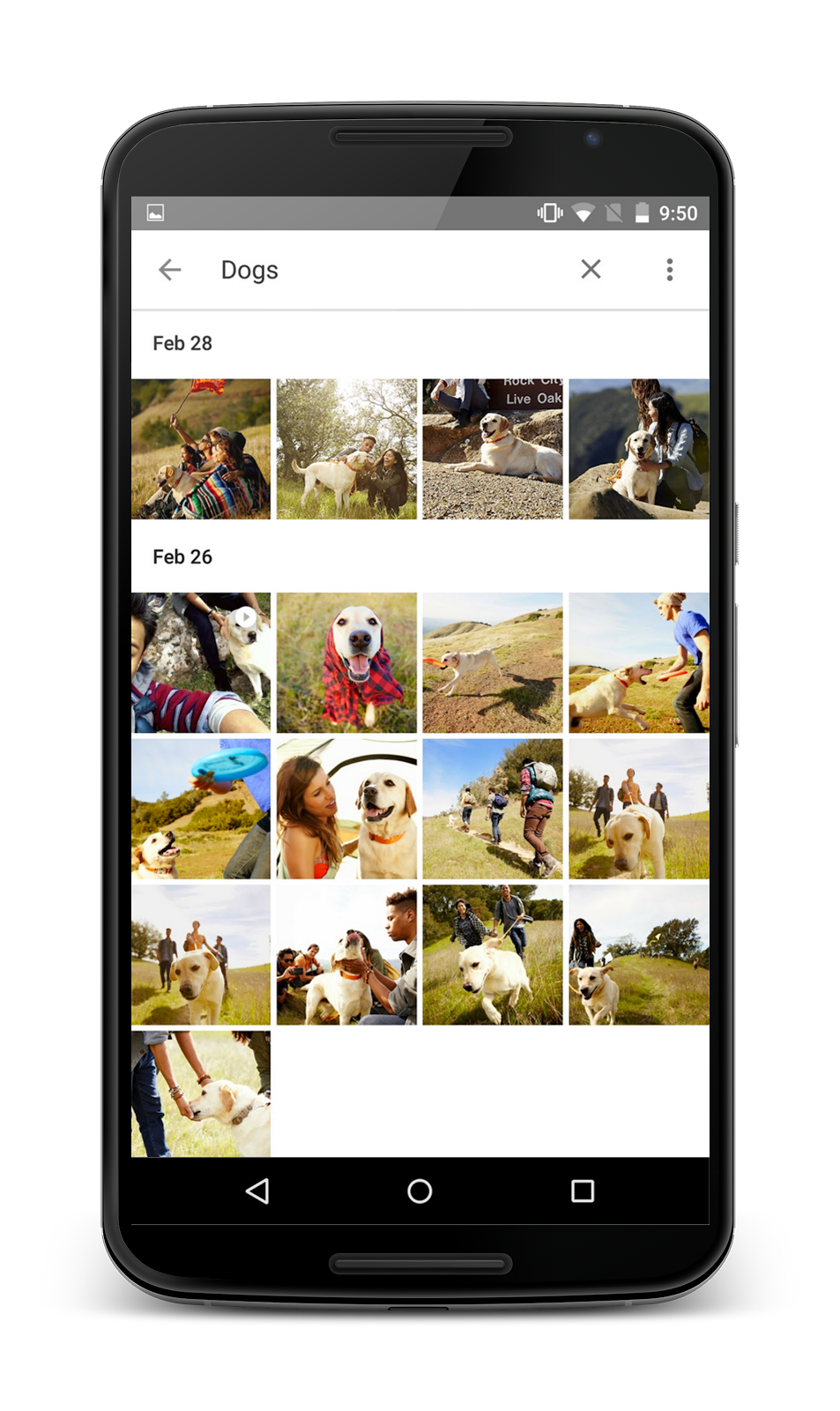
One of the main irritant with massive photo storage where you store thousands of photos is when you want to find that one image which you clicked some months back. It is like finding a needle in a haystack. To ease the process, Photos will try and automatically categorise your photos by people and places. Google has added a visual search feature which will let you search images using terms such as people, places and random things that may be present in the image. For instance, you can search images which have say, ‘the skyline’ or images shot in ‘Delhi’ and so on. The auto-grouping is private by default. You can also use pinch to zoom gesture to go from a single image to images by the week or month, a feature present of Apple’s Photo app as well.
assistant-2
The Auto-awesome feature present on the Google+ has been carried forward to Photos. This will let the app create automatic montage movies, interactive stories, GIF animations from a burst of images, collages and more. You also get the option to share it or edit it or delete it.

Photo editing options which were present with the previous variation of Photos will also be present on the Photos app. Editing tools let you apply filters, adjust colours, change tone maps and so on with ease.

The last and the most important thing in the Photos app is the improvements in Sharing photos. The apps lets you select images in a group by just swiping over them. When sharing images to friends, they will receive a web link from where they can view or download the images you share. This bypasses the need for the recipient to have the Google Photos app installed on his or her phone.


Google I/O 2015: Ten most important announcements that got us excited

Google_IO_google-website_900-1-624x347


The Google I/O 2015 keynote may not be the best we’ve seen from Google, but the search giant had a lot of new announcements to make. From much talked-about Android M to Doze off, here are 10 best announcements from Google I/O you should know about.

1. Android M

Finally, it’s official! Google announced the next iteration of its mobile operating system – Android M. According to Sundar Pichai, the Android M operating system will concentrate more on improving the stability and usability of the platform. There will be a lot more emphasis on the quality of the platform rather than a radically new look. It comes with some cool improvements to app permission, power management and more. Click here, to know more.

2. Android Pay

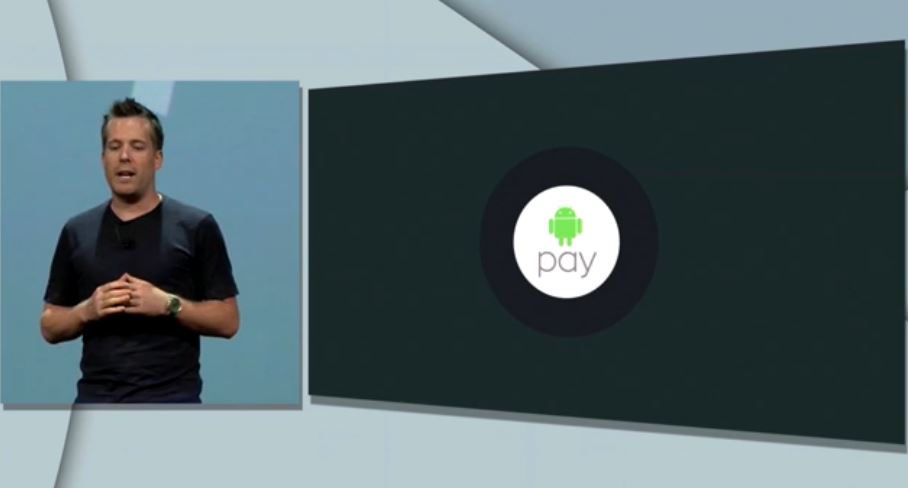
To revive its struggling Google Wallet and also compete with its arch-rival Apple’s new contactless payments platform, Google has announced Android Pay. Though it’s almost like Wallet, Pay brings in new features such as credit card partnerships, fingerprint verification, secure transactions and more.

Android-Pay

3. Doze off

Android devices are known to consume more power than iOS. Now, the company has a new solution dubbed Doze. Doze is a feature in Android M that will push a device into deeper sleep depending upon the last time the device was used. The feature will rely on the activation off your screen to determine the last time the device was active. Google is also planning to decrease the sleep power use by two times.

4. Google Now on tap

Google has introduced Now on Tap for an improved ‘Now’ experience. The new design will now respond to content by analysing what’s on Android device’s display. For instance, if you are mailing a friend about movie listings, tap on the movie name and hold on to the home button. Google Now will just pull up the relevant Now cards to give you more information. This basically lets you do simple tasks without leaving your current app.

5. Android Wear

Google’s Android Wear also gets the much required update. The new updated Android Wear brings changes such as Maps will take up the entire Wear device’s display while navigating, flick gesture will allow scrolling through notifications and a new launcher menu will store apps and contacts. It will also allow you to send emojis by drawing them.

6. Cardboard

Google has launched a new version of the Cardboard for devices with bigger displays. The unit will be ditching the headset’s original magnet clicker for a cardboard button that reportedly works with any phone. Google’s SDK is now available for iOS as well as Android, and there will be a dedicated Cardboard app launched on Apple’s App Store.

maps

7. Brillo and Weave

Placing emphasis on the importance on how Internet of Things and smart homes are the future, Google has announced Brillo. Project Brillo is the new operating system and Weave is the new standard that will allow smart devices – like bulb, thermostat, and so on – to communicate with one another. You can also expect built-in support for Wi-Fi and Bluetooth, Google also plans a certification platform for Weave, allowing companies to use it with or without Brillo.

8. Photos app

Google announced a revamped Photos app, which was so far integrated within Google+, with some interesting features. The show-stopping feature being the ability to support unlimited photos and video storage. The image resolution is limited to 16 megapixels and video resolution is limited to 1080p videos, which is good enough for most mobile and amateur photographers out there. This app will be available for Android, iOS as well as the web. With unlimited storage for both photos and videos, Google Photos may just make every other photo storage service, which charges users after a fixed storage limit, redundant.

9. HBO Now for Android

There wasn’t much news about Chromecast or Android TV at this year’s I/O, but one of the biggest developments is its support for HBO Now. HBO Now is streaming-only service that lets you watch everything from Game of Thrones to True Detective. With this move, the service is no more exclusive to Apple and Android users can enjoy it too.

10. Maps

Google I/O 2015 developer conference had some major announcements on the Google Maps app. Just like it has done with YouTube, you will soon be able to take the Maps’ search and turn-by-turn navigation feature offline. According to Google, even for Maps that you have taken offline, you will get the turn by turn voice navigation feature. This is particularly relevant in markets such as India where cellular connectivity may not always be speedy at all times while driving. Offline maps navigation will certainly help out a lot of people on saving up on data charges when they are out and about. However, one also needs to keep in mind that taking a map along with all the navigational information offline will certainly take up significant space on your storage.


Google I/O 2015: Gmail now boasts 900 million users

34_gmail-624x351


Google’s free webmail application is getting close to the 1 billion-user mark, making it the world’s most popular email service. The figures were revealed by the company’s senior vice president of products, Sundar Pichai, who was speaking at the 2015 Google I/O developer conference.

Gmail has more than doubled its user base since 2012, when the number stood at just 425 million. But as well as attracting more consumers, the way people access the service has also changed. Pichai noted during his presentation that 75% of users now check their mail via mobile.

In the past, Google had updated the Gmail for Android app. In an official Google+ post, the company wrote, “Over the next few days, you’ll see a few improvements to the Gmail app for Android based on your feedback with more coming soon.” Among the new changes, you will find that tapping on people’s avatars will now let you see recent conversations with them. You will also be able to view contact info and more.

It also includes more reliable support for non-Gmail addresses (IMAP). It has also been made smoother to add additional accounts.

With inputs from AFP


Turns Any Surface Into a Touchscreen with lenovo smartphone

Lenovo just announced a phone with built-in projection keyboard and the best part is that it can turn any surface upon which its images appear into a touchscreen.


Lenova is the one and only company in build the world's first laser projection smartphone

Apart from this, a built-in kick-stand and variable bracket projector Transform any surface into a smart display


 At the conference, it was used to throw films onto a wall, as well a qwerty keyboard onto a desk and a musical keyboard onto a tabletop, both of which allow the user to interact with them


It is still in developent and  no status regarding when and where it is available for user.When the rumour mill suggested the iPhone 6 would come with a projectionkeyboard (which, incidentally, never happened) the internet lit up. But Lenovo has actually gone and done it; Smart Cast is a real product.

Google I/O: Google announces Internet of Things platform ‘Brillo’

Google-IO_AFP_640-624x351


Project Brillo will be the name of Google’s second attempt to create an operating system that links objects from thermostats to washing machines to each other and to the web.

Revealed at the company’s annual developer conference, Google confirmed that Project Brillo will be based on its existing Android operating system but is significantly streamlined for use in objects other than smartphones and tablets. Back in 2011 Google announced something called Android@Home, the company’s initial attempt to build an Internet of Things platform.

It disappeared almost as quickly as it arrived. Four years later the digital landscape is decidedly different and consumers and developers are ready for a more connected lifestyle where the kettle automatically boils when a car pulls into the garage or the washing machine sends a text alert when the spin cycle is finished.

Another interesting announcement that was made at Google I/O was a revamped Photos app, which was so far integrated within Google+. The show-stopping feature being the ability to support unlimited photos and video storage. However, the image resolution is limited to 16 megapixels and video resolution is limited to 1080p videos, which is good enough for most mobile and amateur photographers out there.

This app will be available for Android, iOS as well as the web. With unlimited storage for both photos and videos, Google Photos may just make every other photo storage service, which charges users after a fixed storage limit, redundant.

With inputs from AFP


Gaana.com Hacked, Millions of Users' Details Exposed

Gaana.com -- One of India's most popular music streaming service with more than 10 Million registered users and 7.5 Million monthly visitors -- has reportedly been hacked, exposing the site’s user information database.

A Pakistani hacker, who claimed responsibility for the hack, claims that details of over 10 Million users of Gaana service including their username, email addresses, MD5-encrypted password, date of births, and other personal information has been stolen and made available in a searchable database.

At the time of writing, Gaana website is currently down for maintenance without any official statement provided yet. As of now, the site displays, "Site is down due to server maintenance. We will be back shortly. Kindly bear with us till then."

By exploiting an SQL injection vulnerability in Gaana website, Mak Man managed to gain access to the details of its 10 Million users. The hacker has also posted a screenshot of SQL exploit he used to get access to the data on Facebook.

Mak Man claimed that he reported the vulnerability by providing full details of the flaw to Gaana.com before. However, the company didn’t respond to his report and ignored, which results in the breach of innocent users personal information.

Flaw Reported to the Company, but Ignored ,even weird when such a reputed company is ignoring vulnerabilities reported to them, putting millions of users at risk.


He also encourages all customers to reset their passwords as soon as possible.

However, simply changing passwords to your Gaana account would not solve the problem, as it will reflect in the leaked database. You are advised to better deactivate your accounts until the issue is resolved. Besides this, change your email, Facebook and Twitter passwords if you are using the same as on Gaana.

Also see: